Hampton, GA · Henry County
Basement Water Damage Restoration in Hampton, GABasement Mold Prevention & Basement Floor Water Removal
Basement Water Damage Restoration in Hampton includes emergency basement flood cleanup, basement sewer backup cleanup and basement wall drying.
Answered 24/7
Expert Basement Water Damage Restoration Serving Hampton
In a Hampton home with a basement and a sump pump, a pump that fails during heavy rain lets water rise fast. Furnaces, water heaters, washers and stored belongings all sit at floor level and take the damage first.
One burst pipe or heavy storm in Hampton can flood a basement. Local restoration pros serve Hampton and nearby Lovejoy, McDonough and Fayetteville, with help available around the clock.
Professional Basement Water Damage Restoration Offered in Hampton
Basement Mold Prevention
After drying, an antimicrobial can be applied to framing and concrete that were wet, to slow mold on surfaces that stay in place.
Basement Floor Water Removal
Water on a concrete floor is squeegeed and extracted, and floor coverings such as carpet, vinyl or laminate are lifted to dry the slab.
Emergency Basement Flood Cleanup
Help is available any hour when water is rising in the basement from a burst pipe, a sewer backup or heavy rain.
Basement Dehumidification
Dehumidification continues until humidity and material readings are normal. Turning it off too early lets moisture return.
Basement Drying Services
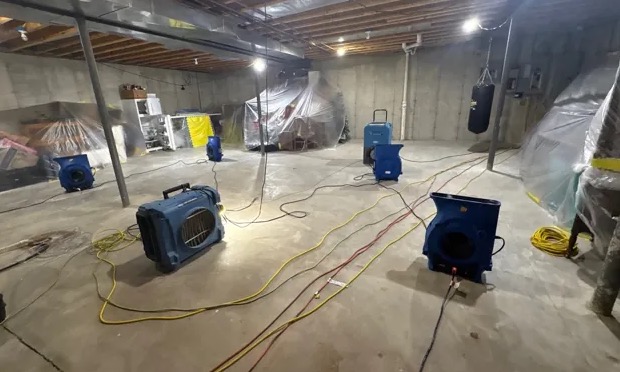
Air movers and dehumidifiers are placed to dry walls, framing and the slab. Below-grade rooms dry slowly, so readings are taken daily.
How to Know You Need Basement Water Damage Restoration in Hampton
Peeling Paint or Wallpaper
Paint that peels or blisters on basement walls often has moisture behind it.
Damp or Musty Odors
A damp, earthy or musty smell in the basement often means hidden moisture in walls, carpet or the slab.
Wet or Stained Basement Walls
Dark, wet patches or tide lines on basement walls show where water seeped in or wicked up.
Efflorescence on Concrete Walls
White, chalky deposits on concrete walls mean water is moving through the concrete and leaving minerals behind.
How Basement Water Damage Restoration Works in Hampton
Step 1: Source Control and Extraction
The pipe is shut off, the sump restarted or the backup stopped, then the water is pumped out.
Step 2: Structural Drying Setup
Lower drywall is removed where soaked, and equipment is placed to dry wall cavities and the slab.
Step 3: Contaminant Removal
Materials touched by sewage or dirty water are removed and hard surfaces are cleaned and disinfected.
Step 4: Monitoring and Completion
Daily readings track drying until every material is normal, then equipment is removed.
Why Basement Water Damage Occurs in Hampton
High Water Table and Hydrostatic Pressure
A high water table pushes groundwater up through the slab and into the joints between wall and floor.
Faulty Basement Waterproofing
Old or failed waterproofing on foundation walls lets water through during wet weather.
Water Heater or Appliance Leaks
Water heaters, washers and utility sinks in the basement can leak or fail without warning.
Sewer Line Backups
A blocked or overloaded sewer line pushes wastewater up through basement drains and toilets.
Residential and Commercial Basement Water Damage Restoration in Hampton
Residential Basement Water Damage Restoration
A sewer backup in a home basement needs contaminated carpet, pad and drywall removed and every hard surface disinfected before drying.
Commercial Basement Water Damage Restoration
In restaurants and stores with basements, sewage backups need fast containment so contamination does not reach food or customer areas.
DIY vs. Professional Basement Water Damage Restoration in Hampton
You can move belongings off the floor and run a household dehumidifier. Drying soaked walls and slabs needs larger equipment and moisture readings to confirm the space is truly dry.
Factors Affecting Basement Water Damage Restoration Cost in Hampton
The cost of basement water damage restoration in Hampton depends on how much water there is, whether it is clean or sewage and how much finished material must be removed.
Drying Time Required
Basements dry slowly, and longer drying means more equipment days and monitoring visits.
Water Category
Clean water costs less to handle than sewage, which needs protective gear, removal and disinfection.
Dehumidification Needs
Large dehumidifiers may need to run longer in below-grade spaces than in upper floors.
Does Insurance Cover Basement Water Damage Restoration?
Flood damage from rising outside water usually needs flood insurance. Water from inside the home, like a broken pipe, is more often covered.
The Value of Local Pros for Basement Water Damage Restoration in Hampton
Industrial-Grade Equipment
Pumps, extractors and large dehumidifiers remove water much faster than household wet vacs and fans.
Advanced Moisture Detection
Moisture meters and thermal cameras find water in walls and slabs that looks dry.
Water Type Handling
Clean water, gray water and sewage are each handled with the right protection and removal steps.
24/7 Emergency Basement Water Damage Restoration for Hampton
Storm night, weekend or holiday, local restoration pros handle flooded basements in Hampton. Call (678) 672-1781 to get the pumps running and the water out.
Call Now (678) 672-1781Local Basement Water Damage Restoration Coverage: Hampton and Beyond
Besides Hampton, the pros handle basement pumping, drying and dehumidification in nearby Lovejoy, McDonough and Fayetteville.
- Basement Water Damage Restoration in Lovejoy
- Basement Water Damage Restoration in McDonough
- Basement Water Damage Restoration in Fayetteville
- Basement Water Damage Restoration in Stockbridge
- Basement Water Damage Restoration in Brooks
- Basement Water Damage Restoration in Riverdale
- Basement Water Damage Restoration in Peachtree City
- Basement Water Damage Restoration in Tyrone
- Emergency Damage Restoration in 30228
- Storm Damage Restoration in 30228
- Water Damage Restoration in 30228
- Water Extraction Service in 30228
- Water Leak Detection in 30228
- Water Removal Service in 30228
Basement Water Damage Restoration Common Questions Answered
What health risks come with delayed basement flood cleanup?
Standing water and wet materials can support bacteria and microbial growth, and sewage carries contaminants that need disinfection.
What is the priority during emergency basement flood cleanup?
Safety first, especially electrical hazards, then stopping the source and pumping out the water as quickly as possible.
How long does below-grade drying take after a flood?
Often several days or longer, since concrete and cool basement air dry slowly. Daily readings show progress.
What does below-grade moisture removal include beyond pumping?
Extracting carpet and pad, opening wet walls, running air movers and dehumidifiers, and checking readings until dry.
Why is quick action important for below-grade flood restoration?
Basements dry slowly, so every hour of standing water adds days of drying and more material to replace.